ICT One Shot One Kill Trading Model — 50 to 75 Pips a Week with 20-Week IPDA Range

Over 150 pages of knowledge coming from 8+ years of experience from Professional ICT Trader.
👉 Buy Now!
ICT One Shot One Kill is a 50 to 75 pips per week trading plan — designed for traders who cannot watch the market all day. Instead of grinding intraday, you mark the 20-week IPDA dealing range, identify the weekly bias, wait for a high-impact economic event to trigger the volatility injection, and execute a single trade in the direction of the weekly bias.
In this guide I walk you through the One Shot One Kill model — the five-step framework, the 20-week IPDA preparation, the opportunity discovery, the trade planning, the killzone execution, the trade management rules, common mistakes and the FAQ.
You can jump to the section you are most interested in from below or continue reading the full article for a complete view.
What is ICT One Shot One Kill Trading Model
ICT One Shot One Kill is a 50 to 75 pips per week trading plan.
In this model we look for the weekly bias and the next draw on liquidity on the weekly chart, then wait for a high-impact economic data event like FOMC or NFP to sweep the liquidity — and grab that opportunity.
To master the ICT One Shot One Kill model, follow the 5 steps explained below.
(I) Preparation
Note all medium and high-impact economic events for the market you are following.
Study the economic events for the week ahead, and consider how the current market structure and the economic events together suggest a specific weekly profile for that week’s range.
Now go to the weekly chart and determine the IPDA data range of the last 20 weeks.
Mark the highest high and lowest low of the past 20 weeks. This is your current dealing range.
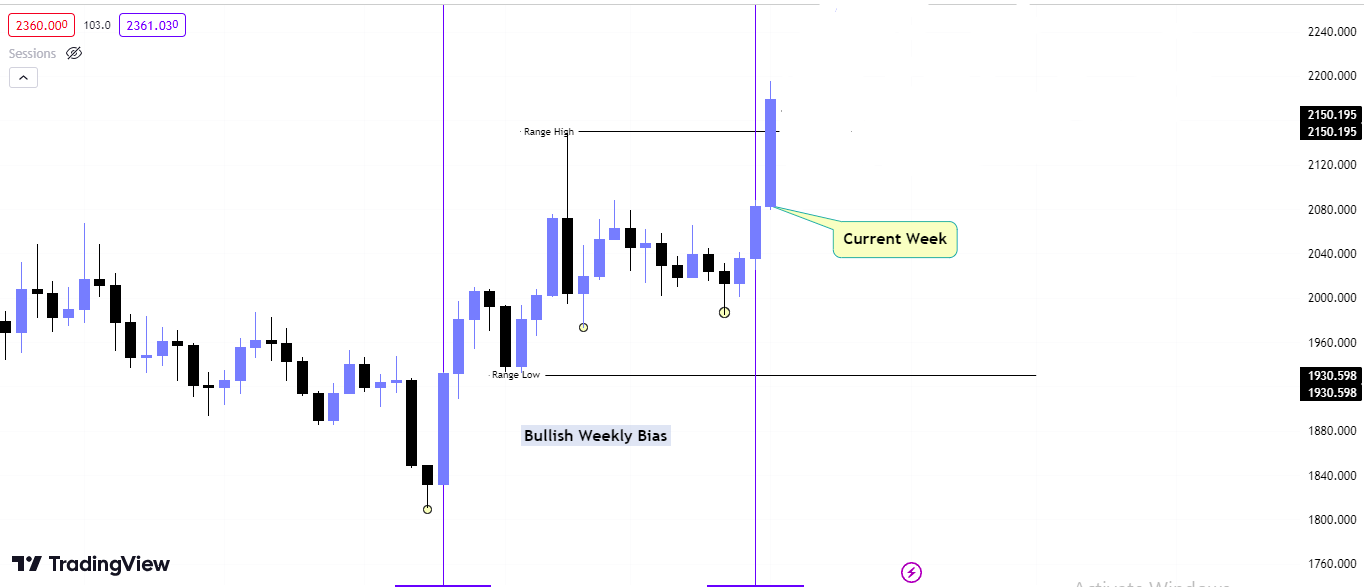
Inside the dealing range, look for the next draw on liquidity — where price is likely to trade to next: below which old low, or above which old high.
Then look for an Array PD TIK in the direction of the weekly range bias.
We anticipate price to move to our PD array in the next trading week. This volatility injection is what we wait for — a run based on low-resistance liquidity-run conditions.
✨ Update: I've launched my ICT Trading Strategies PDF eBook! Check it out at ictpdf.com .
(II) Opportunity Discovery
We look for a 50 to 75 pips range that would enable a run to Buy Side Liquidity when bullish institutional order flow is present.
Or we target the Sell Side Liquidity when bearish institutional order flow is present.
(III) Trade Planning
When the market is poised to decline, we look for the convergence of (1) manipulation in price opposite to our weekly bias, with (2) the economic calendar suggesting that volatility injection will likely unfold.
We look for premium buy-side liquidity to execute a sell trade.
When the market is poised to rise, we look for discount sell-side liquidity to execute a buy trade.
(IV) Trade Execution
When our bias is bearish, we anticipate a 15-minute optimal trade entry to form inside a bullish retracement toward the bearish PD array — during the London open or New York open Killzone.
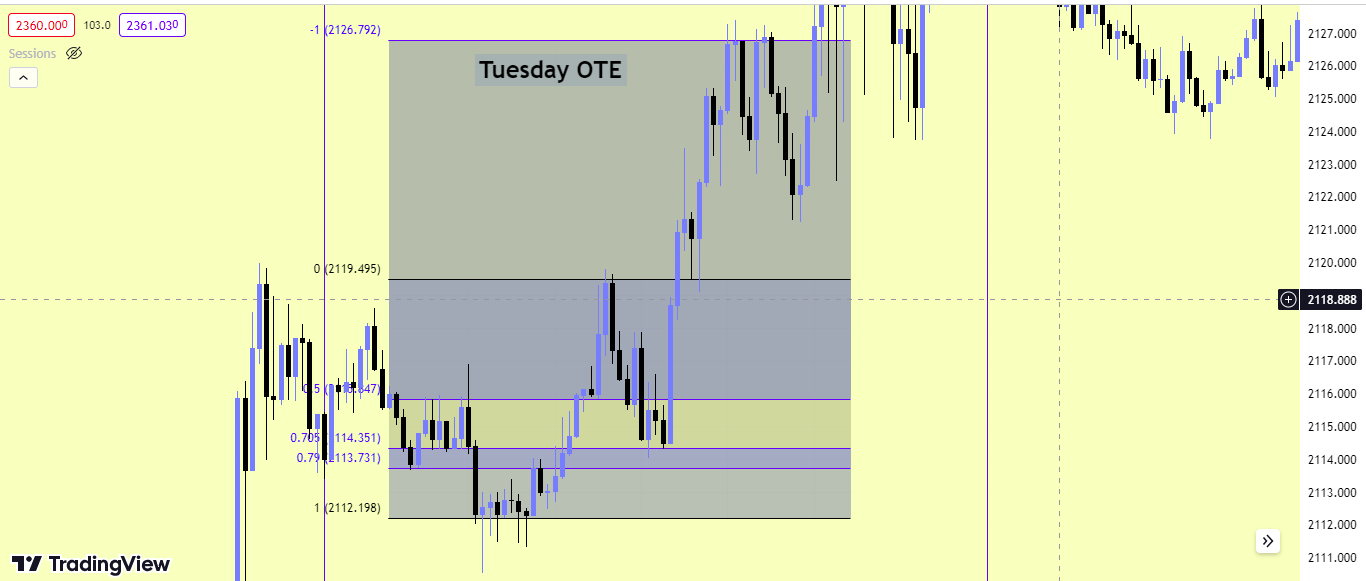
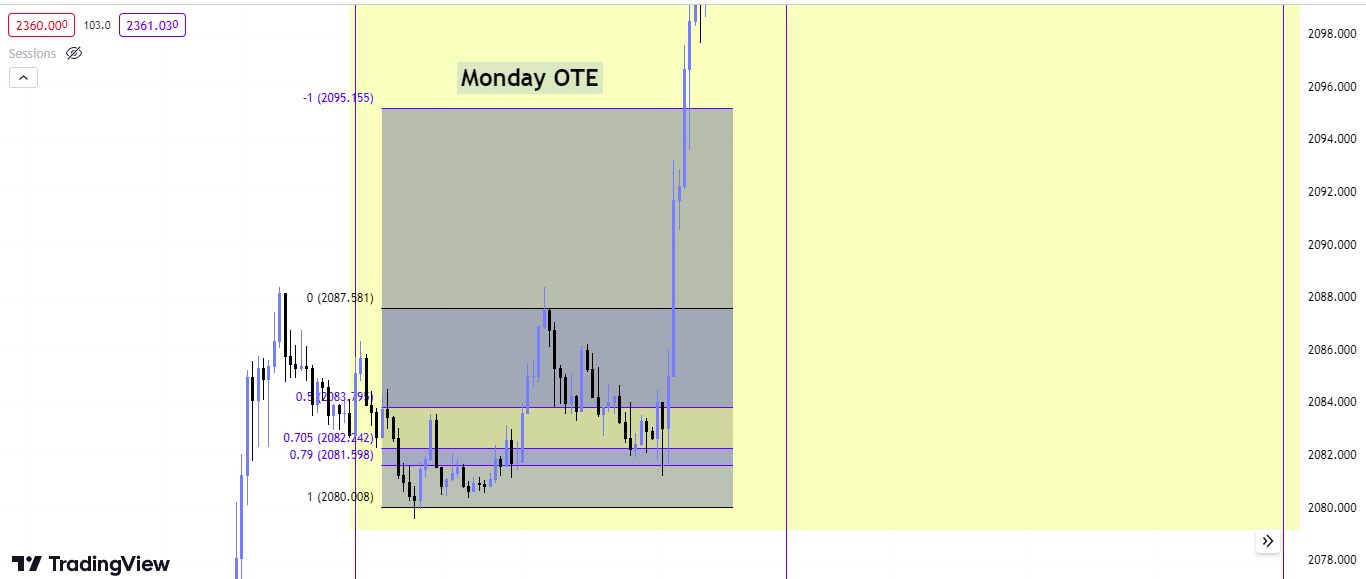
Or we look for a buy-stop raid (sell side) to take a sell trade.
(V) Trade Management
When we enter a trade, we place a limit order to take 50 pips as our objective on a single position. We use one order to manage the trade idea.
If you capture 50 pips, close 80% of the position and see if the remainder can reach 75 pips partials.
Which Day to Expect for Trade Setup Formation
Expect an anchor point to form on a Monday, Tuesday or Wednesday in order to frame a trade setup.
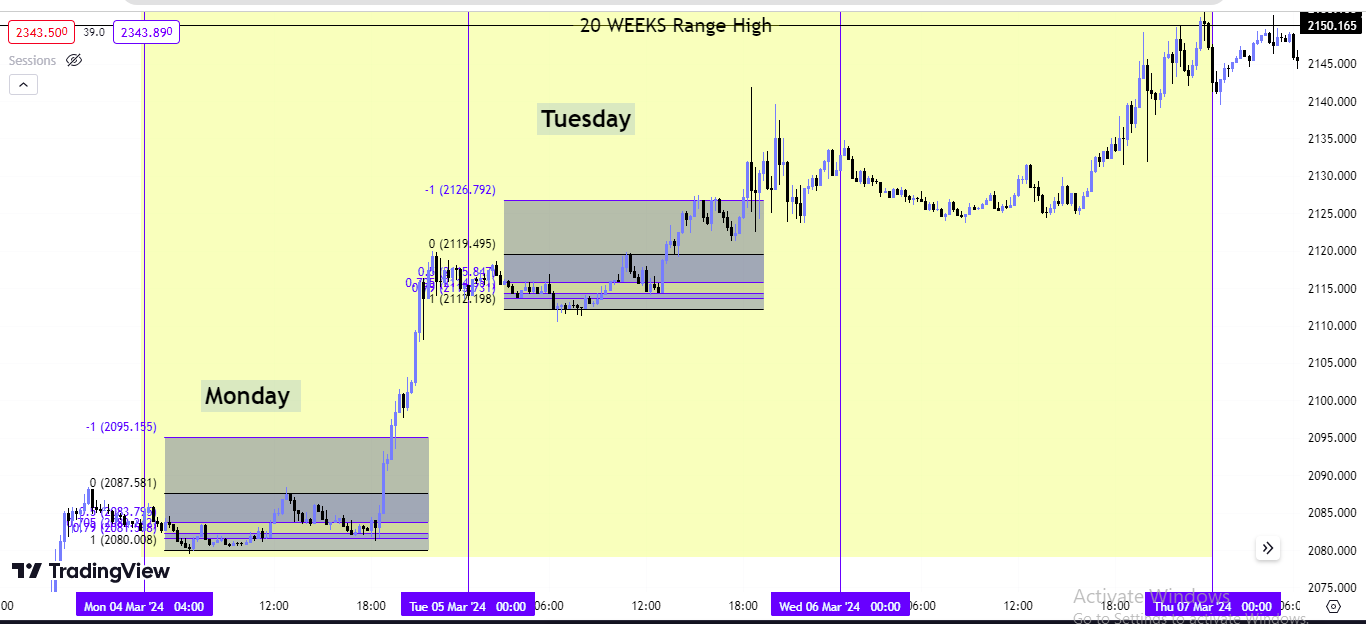
Step-by-Step One Shot One Kill Trade Flow
This is the exact sequence I run for the One Shot One Kill setup.
- Note all medium and high-impact economic events. FOMC, NFP, CPI and central bank rate decisions for the week ahead.
- Mark the 20-week IPDA dealing range. Highest high and lowest low of the past 20 weeks on the weekly chart.
- Identify the next draw on liquidity inside the dealing range. Where price is likely to go — old high (buy-side liquidity) or old low (sell-side liquidity).
- Identify the bias-aligned PD array. Order block, FVG or breaker in the direction of the weekly bias inside the dealing range.
- Wait for the anchor point. Monday, Tuesday or Wednesday — manipulation against the weekly bias that aligns with a high-impact economic event.
- Drop to the 15-minute for OTE. Wait for a 15-minute optimal trade entry inside the retracement toward the PD array.
- Execute during the London or New York killzone. Killzone alignment is mandatory.
- Set the stop. Beyond the OTE swing extreme, with a small buffer.
- Take 50 pips on 80% of the position. Trail the remaining 20% to 75+ pips.
- Use Fibonacci or HTF FVG for extended targets. If the runner has room, target the next higher-timeframe PD array.
Best Pairs for ICT One Shot One Kill
The model works best on instruments that respond to high-impact economic events — GBP/USD, EUR/USD, USD/CAD, USD/JPY plus the major US indices.
For traders in the United States who follow the CFTC FIFO and no-hedge rules, the One Shot One Kill framework maps cleanly onto NQ and ES futures (CME Group) plus regulated forex pairs through US-based brokers. FOMC, NFP and CPI release windows are the highest-conviction volatility injections for this model.
Common Mistakes Around One Shot One Kill
These are the recurring mistakes I see when traders first start trading One Shot One Kill.
- Skipping the 20-week IPDA range. The 20-week range is the dealing-range filter. Without it, every weekly setup looks the same.
- Trading without a calendar event. The volatility injection is the trigger. Setups without a high-impact event have a much lower hit rate.
- Trading anchor points later in the week. The anchor must form Monday, Tuesday or Wednesday. Thursday and Friday anchors usually do not deliver the full 50–75 pips.
- Skipping the 15-minute OTE. The OTE is the entry refinement — entering on the touch of the PD array without OTE confirmation produces unnecessary stop-outs.
- Not closing 80% at 50 pips. The model is a fixed-target plan. Holding for 200 pips converts it into something else.
- Trading outside the killzones. The execution window is London open or New York open. Setups outside those windows lose the institutional volume.
FAQs about ICT One Shot One Kill
Brief answers to the questions readers ask most often about the One Shot One Kill model.
Which day to expect for the trade setup formation?
Expect an anchor point to form on a Monday, Tuesday or Wednesday in order to frame a trade setup.
Is ICT One Shot One Kill a reliable trading model?
Yes — it is one of the most reliable ICT models, especially suited for traders who cannot sit and watch the market daily. You mark the 20-week range and look for the setup in the first 3 days of the week.
Can the profit target go beyond 75 pips?
75 pips is just the recommended easily-achievable target. You can trail your trade up to 100 pips and beyond, or use ICT Fibonacci Levels to set the profit target.
What is the dealing range?
The dealing range is the highest high and lowest low of the past 20 weeks on the weekly chart. It is the IPDA reference range that defines the institutional draw on liquidity.
Which economic events count?
FOMC, NFP, CPI, central bank rate decisions, and any tier-1 release that produces volatility injection. The model is built around these events as the catalyst.
What is the weekly bias?
The directional read of the weekly chart inside the 20-week dealing range — bullish if price is targeting the dealing-range high, bearish if it is targeting the low.
How is One Shot One Kill different from the One Trade Setup for Life?
The One Trade Setup is a daily intraday model based on five session ranges. One Shot One Kill is a weekly model based on the 20-week IPDA range and a single high-impact event-driven trade per week.
What timeframes do I use?
Weekly for the dealing range and bias. 4-hour for the PD array. 15-minute for the OTE and entry trigger.
Where do I place the stop loss?
Beyond the 15-minute OTE swing extreme, with a small buffer.
What killzones do I trade?
London open and New York open. The 09:50 NY-AM macro window is a particularly strong execution slot.
How do I manage the trade once entered?
Place a limit order at 50 pips as the primary target. If the limit fills, close 80% of the position and trail the remaining 20% to 75+ pips.
Does this model work on indices and gold?
Yes — NQ, ES and XAU/USD all produce textbook One Shot One Kill setups, especially around FOMC and NFP windows.
✨ Update: I've launched my ICT Trading Strategies PDF eBook! Check it out at ictpdf.com .


Do you have any YouTube channel specially in Urdu/Hindi ?
You can search @Tradetrack on youtube, he sometimes post videos there.
Terima kasih.